AII Launches Industry-First Tool Standardising Measurement of Carbon Emissions
The new tool published by the climate-focused nonprofit aims to create a standardised benchmark across textile facilities to accelerate fashion’s efforts to decarbonise.

Textile-to-textile recycling technologies could be a climate game changer for fashion’s environmental footprint. But like renewable energy, they need state support for market efforts to scale, argues Nicole Rycroft.
Textile-to-textile recycling technologies could be a climate game changer for fashion’s environmental footprint. But like renewable energy, they need state support for market efforts to scale, argues Nicole Rycroft.

More than a year after the ultra-fast-fashion company said it would tackle issues of unlawful overtime, 75-hour weeks remain common in its supply chain, Swiss watchdog Public Eye found.
More than a year after the ultra-fast-fashion company said it would tackle issues of unlawful overtime, 75-hour weeks remain common in its supply chain, Swiss watchdog Public Eye found.

A study published this week found traces of cotton from Xinjiang in nearly a fifth of the products it examined, highlighting the challenges brands face in policing their supply chains even as requirements to do so spread to raw materials from diamonds to leather and palm oil.
A study published this week found traces of cotton from Xinjiang in nearly a fifth of the products it examined, highlighting the challenges brands face in policing their supply chains even as requirements to do so spread to raw materials from diamonds to leather and palm oil.

Overconsumption and fast fashion have become easy targets for brands flexing their climate-friendly attributes. Consumers may agree with the message — but take issue with a self-righteous tone.
Overconsumption and fast fashion have become easy targets for brands flexing their climate-friendly attributes. Consumers may agree with the message — but take issue with a self-righteous tone.

Traces of cotton from Xinjiang were found in nearly a fifth of samples from American and global retailers, highlighting the challenges of complying with a US law aimed at blocking imports that could be linked to forced labour in China.
Traces of cotton from Xinjiang were found in nearly a fifth of samples from American and global retailers, highlighting the challenges of complying with a US law aimed at blocking imports that could be linked to forced labour in China.

A profitable, multi-trillion dollar fashion industry populated with brands that generate minimal economic and environmental waste is within our reach, argues Lawrence Lenihan.
A profitable, multi-trillion dollar fashion industry populated with brands that generate minimal economic and environmental waste is within our reach, argues Lawrence Lenihan.

The fashion industry continues to advance voluntary and unlikely solutions to its plastic problem. Only higher prices will flip the script, writes Kenneth P. Pucker.
The fashion industry continues to advance voluntary and unlikely solutions to its plastic problem. Only higher prices will flip the script, writes Kenneth P. Pucker.

The outerwear company is set to start selling wetsuits made in part by harvesting materials from old ones.
The outerwear company is set to start selling wetsuits made in part by harvesting materials from old ones.

Companies like Hermès, Kering and LVMH say they have spent millions to ensure they are sourcing crocodile and snakeskin leathers responsibly. But critics say incidents like the recent smuggling conviction of designer Nancy Gonzalez show loopholes persist despite tightening controls.
Companies like Hermès, Kering and LVMH say they have spent millions to ensure they are sourcing crocodile and snakeskin leathers responsibly. But critics say incidents like the recent smuggling conviction of designer Nancy Gonzalez show loopholes persist despite tightening controls.

Europe’s Parliament has signed off rules that will make brands more accountable for what happens in their supply chains, ban products made with forced labour and set new environmental standards for the design and disposal of products.
Europe’s Parliament has signed off rules that will make brands more accountable for what happens in their supply chains, ban products made with forced labour and set new environmental standards for the design and disposal of products.
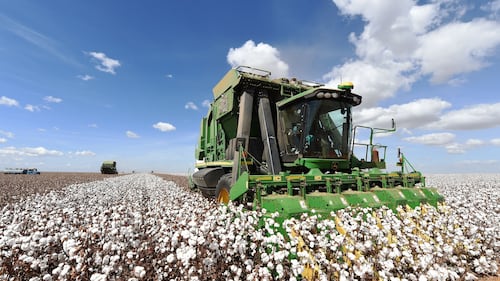
Fashion’s biggest sustainable cotton certifier said it found no evidence of non-compliance at farms covered by its standard, but acknowledged weaknesses in its monitoring approach.
Fashion’s biggest sustainable cotton certifier said it found no evidence of non-compliance at farms covered by its standard, but acknowledged weaknesses in its monitoring approach.

As they move to protect their intellectual property, big brands are coming into conflict with a growing class of up-and-coming designers working with refashioned designer gear.
As they move to protect their intellectual property, big brands are coming into conflict with a growing class of up-and-coming designers working with refashioned designer gear.
The new tool published by the climate-focused nonprofit aims to create a standardised benchmark across textile facilities to accelerate fashion’s efforts to decarbonise.
The bloc’s overhaul sharply reduces the number of companies covered by ESG reporting and supply chain due-diligence laws, easing compliance pressures but increasing concerns over accountability.
The European Commission has adopted new measures that will require medium and large companies to stop discarding unsold clothing and footwear, in the bloc’s latest move to target textile waste.
The financial implications of global warming are becoming increasingly difficult for corporate executives to ignore.
The ultra-fast fashion retailer says it has updated language on its website following engagement with the group.
The news comes less than a week after the Coalition to Abolish the Fur Trade staged protests outside the brand’s stores.
Following the publicisation of Condé Nast’s fur ban in October, the Harper’s Bazaar publisher will now prohibit the use of animal fur in its editorial and advertising content.
A week after devastating floods, the industry association in Sri Lanka says multiple large facilities have been impacted, as recovery efforts for affected workers are underway.